


Whatsapp
 Hongkong Suntex Electronic Co., Ltd.


A robot wiring harness is the central nervous system of any robotic apparatus, from industrial arms to autonomous mobile robots (AMRs). It is an assembly of electrical wires, connectors, and protective tubing that routes power and signals between the robot's controller, motors, sensors, and end-effectors.
Unlike standard automotive or consumer electronics cables, robotic cable assemblies must withstand extreme physical stress. They are subject to constant bending, twisting, vibration, and exposure to oils, coolants, and high temperatures. A failure in this system can lead to catastrophic downtime, making the selection of high-quality custom robot wiring solutions critical for operational reliability.
Hongkong Suntex Electronic Co., Ltd. designs these complex systems to ensure seamless communication and power delivery, minimizing signal interference and maximizing the lifespan of your robotic equipment.
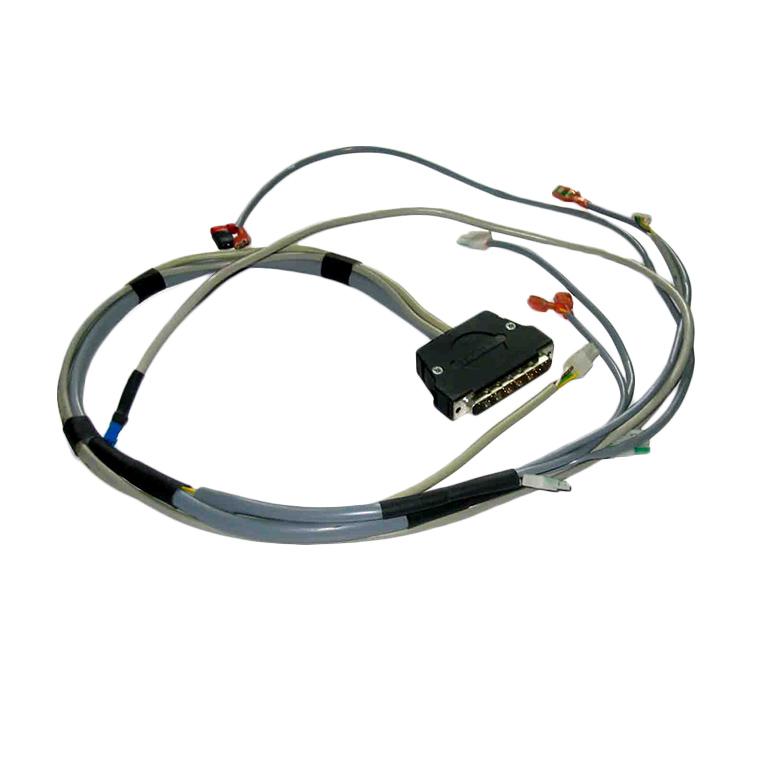
Established in 2009, we bring over 15 years of specialized experience in wire harness manufacturing. Our deep understanding of industrial robot cable assemblies ensures that we anticipate challenges before they arise.
We hold ISO9001-2015 and IATF16949:2016 certifications. This means every robot wiring harness we produce meets the rigorous quality demands of the automotive and aerospace industries.
With production bases in both Guangdong and Henan, we leverage regional labor advantages to offer high-performance robot wiring harnesses at highly competitive prices without compromising on material quality.
Our facilities are equipped with fully automatic terminal crimping machines and high-precision testing instruments, ensuring consistent quality for every custom robotic cable assembly.
We use top-tier connectors from JST, TE, Molex, and HRS. This ensures reliable signal integrity and durability in harsh robotics environments.
Serving major brands like ThinkPad, Huawei, and DJI, our supply chain expertise guarantees timely delivery of robot wiring harnesses to customers worldwide.
At Hongkong Suntex and our subsidiary Dongguan NAKA Electronics, quality is not an afterthought—it is engineered into every step of the robot wiring harness manufacturing process.
We source raw materials from trusted global suppliers including Molex, Amphenol, Yazaki, and DELPHI. All wires and connectors comply with EU RoHS standards, ensuring environmental safety and regulatory compliance for international markets.
Our production lines utilize fully automatic terminal crimping machines to achieve precise termination pressures, reducing the risk of loose connections or signal loss. Each batch undergoes strict visual inspection and dimensional checks.
Before shipment, every robot cable assembly is tested for continuity, insulation resistance, and dielectric strength. We also perform bend-cycle tests to simulate real-world robotic movement, ensuring the harness can withstand thousands of cycles without failure.
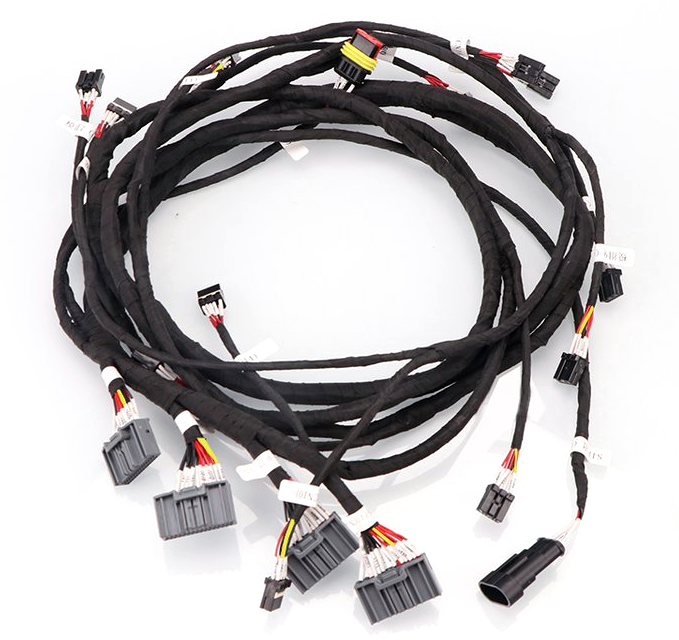
Selecting a partner for robot wiring harness customization requires careful evaluation of technical capability, certification, and scalability. Here is what procurement managers should prioritize:
Ensure your supplier holds ISO9001 and ideally IATF16949 (automotive grade). These certifications verify that their quality management systems can handle the precision required for industrial robot harnesses.
Ask which connector brands they work with. A supplier experienced with JST, TE, and Molex can better advise on design optimization and cost-saving alternatives without sacrificing performance.
Verify if they have multiple production bases (like our operations in Guangdong and Henan) to scale up during peak demand and mitigate supply chain risks.
The best suppliers offer DFM (Design for Manufacturability) feedback. They should proactively suggest improvements to your harness design to reduce cost and improve reliability.
Our robot wiring harnesses are deployed across a wide spectrum of high-tech industries. Below are key application areas where our solutions deliver value:
Heavy-duty harnesses for 6-axis robotic arms, collaborative robots (cobots), and automated guided vehicles (AGVs). Designed to resist oil, coolant, and mechanical abrasion.
Lightweight, flexible cable assemblies for drone rotors, sensor modules, and UAV control systems. Critical for maintaining low weight while ensuring signal integrity.
High-voltage harnesses for battery management systems (BMS) and energy storage units. Ensures safe power transmission in electric vehicle charging infrastructure.
Biocompatible, high-flex cables for surgical robots and diagnostic imaging equipment. Meets strict hygiene and electromagnetic compatibility (EMC) standards.
Precision wiring for smart home devices, wearable tech, and handheld gadgets. Focuses on miniaturization and aesthetic finish.
Harnesses for EV batteries, motor controllers, and autonomous driving sensors. Leverages our IATF16949 certified processes for automotive-grade reliability.
Use this checklist when evaluating potential suppliers for your robot wiring harness needs:
Always request a sample batch before committing to a large order. Test the samples under real-world conditions—flexing the cables, exposing them to heat, and checking signal stability. This small investment can prevent costly downtime later.
Hongkong Suntex offers comprehensive sampling services to help you validate our quality before mass production.
We are not just an assembler. With subsidiaries in Dongguan and Henan, plus a holding company in Hong Kong, we control the entire value chain—from raw material sourcing to final assembly and testing. This vertical integration reduces costs and improves traceability.
Our partners include industry giants like Huawei, Canon, Sony Ericsson, Great Wall Motor, and DJI. If we meet the stringent requirements of these companies, we can certainly meet yours.
Our engineering team specializes in finding ways to lower your landed cost. Whether it's optimizing cable length to reduce waste, suggesting alternative but equivalent connectors, or leveraging our Henan facility for labor-intensive tasks, we actively work to save you money.
From prototyping to mass production, our facilities are equipped to handle volumes of any size. Our advanced machinery ensures consistency, so your first unit and your ten-thousandth unit are identical in quality.
Procuring robot wiring harnesses can be challenging. Here are common issues buyers face and how we solve them:
Robotic arms undergo continuous motion, causing standard cables to fatigue and break. Solution: We use high-flex tinned copper conductors and specialized PUR jackets designed for dynamic applications, significantly extending cable life.
Electromagnetic interference (EMI) from motors can corrupt data signals. Solution: We implement proper shielding techniques, including braided shields and twisted pair configurations, to ensure clean signal transmission.
Poorly crimped connectors can lead to intermittent connections. Solution: Our fully automatic crimping machines ensure precise pressure application every time, verified by post-production continuity testing.
Custom harnesses often take weeks to produce. Solution: By keeping key components in stock and utilizing efficient production workflows, we reduce lead times without compromising quality.
Lead times vary based on complexity and volume. Prototype samples typically take 7-10 days, while mass production orders may take 15-25 days depending on quantity. We recommend planning ahead to ensure timely delivery.
Yes, absolutely. We can manufacture directly from your provided Gerber files, CAD drawings, or schematics. Additionally, our engineering team can review your designs for manufacturability and suggest optimizations.
Our manufacturing facilities are ISO9001 and IATF16949 certified. All products comply with EU RoHS standards. We can also provide UL, CE, or other specific certifications upon request for certain markets.
Yes, we specialize in both OEM (manufacturing to your specs) and ODM (designing solutions for you) services. Our team can assist with material selection, connector pairing, and harness layout design.
We accommodate a range of needs. For prototypes and small batches, MOQ can be as low as 10-50 pieces. For mass production, we offer competitive pricing with flexible MOQ terms.
Every batch undergoes 100% continuity testing, insulation resistance checks, and visual inspection. We also perform random bend-cycle tests on production samples to verify durability.
Hong Kong Suntex Electronics is a comprehensive manufacturer in the wire harness industry.
The company was established in 2009. For over 15 years, we have always adhered to the pursuit of... Subscribe Our Newsletter

Privacy statement: Your privacy is very important to Us. Our company promises not to disclose your personal information to any external company with out your explicit permission.
Fill in more information so that we can get in touch with you faster
Privacy statement: Your privacy is very important to Us. Our company promises not to disclose your personal information to any external company with out your explicit permission.
