


Whatsapp
 Hongkong Suntex Electronic Co., Ltd.


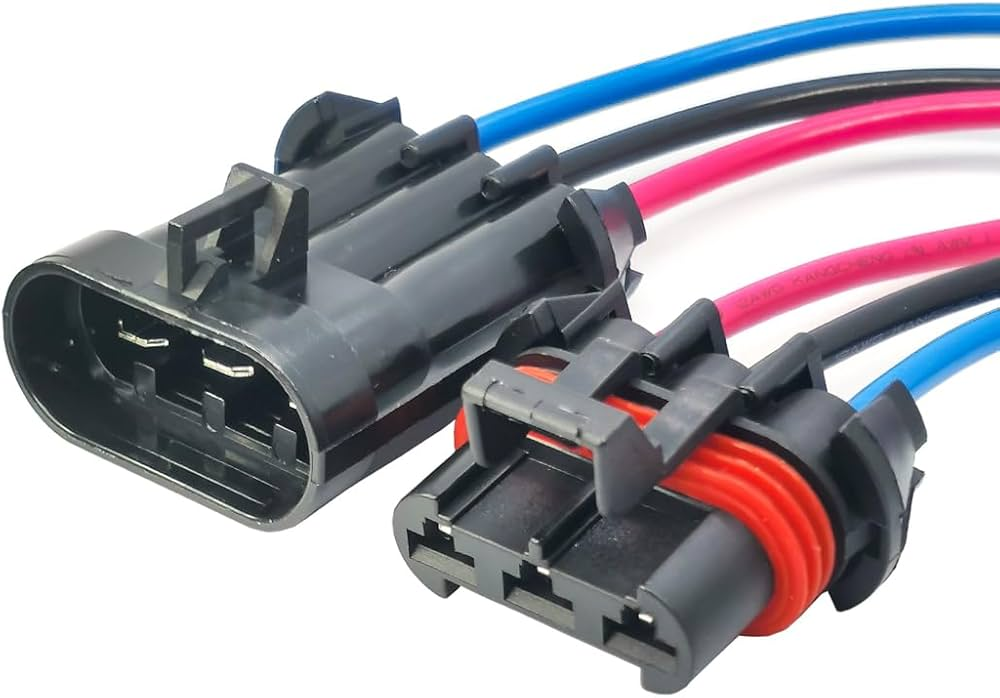
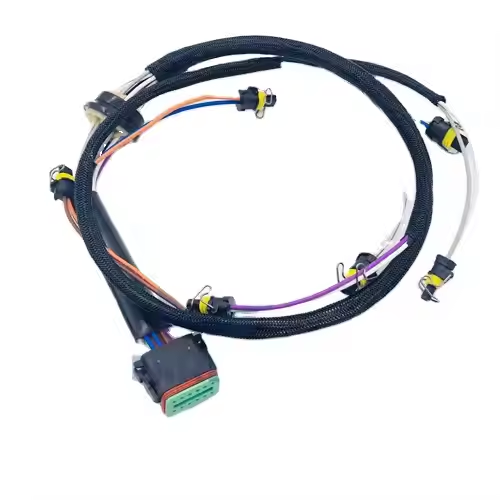
An automotive fan wiring harness is the central nervous system for your vehicle's cooling components. It acts as a protective conduit and distribution network, routing power from the battery to the radiator fan, cabin blower, and auxiliary cooling units while managing data signals for modern electronic control modules.
Without a reliable wiring solution, even the most advanced cooling systems fail. Our automotive fan wiring harnesses are engineered to withstand extreme under-hood temperatures, resist vibration-induced fatigue, and prevent electrical shorts in harsh environments.
Hongkong Suntex Electronic Co., Ltd. specializes in manufacturing these critical components, ensuring that your engine thermal management operates efficiently throughout the vehicle's lifespan. We provide customized solutions that integrate seamlessly with OEM specifications.
With over 15 years of industry experience since 2009, we have established a robust manufacturing footprint across China. Our primary facility, Dongguan NAKA Electronics, leverages the Pearl River Delta's advanced supply chain for rapid prototyping and production.
For cost-sensitive high-volume orders, our Henan NAKA Electronics plant offers labor costs up to 40% lower than coastal regions, providing significant savings on your procurement budget without compromising quality.
We serve major global brands including HONDA, Great Wall Motor, Skyworth, and Lenovo, proving our capability to meet the rigorous demands of international automotive and electronics markets.
In the automotive sector, quality is non-negotiable. Our manufacturing processes are governed by two of the world's most stringent standards:
We utilize advanced high-precision crimping machines and automated testing instruments to guarantee zero-defect delivery. Our raw materials are sourced from trusted suppliers like Molex, Amphenol, and Yazaki, ensuring the integrity of every connection point.
Selecting a partner for your automotive fan wiring harness requirements requires more than just price comparison. You need a supplier who understands the technical nuances of automotive electrical systems and can offer end-to-end support.
Every vehicle platform is unique. A generic off-the-shelf solution often leads to installation headaches and reliability issues. Look for a manufacturer like Hongkong Suntex that provides customized engineering solutions. From connector selection to wire gauge optimization, your supplier should adapt to your design, not the other way around.
Production delays can halt your assembly line. Verify that your supplier has access to premium raw materials (such as LTC Cables or Delphi connectors) and maintains strategic inventory levels. Our dual-factory model in Dongguan and Henan ensures we can scale production rapidly regardless of regional constraints.
Low cost does not mean cheap materials. True value comes from intelligent design and efficient manufacturing. We offer professional cost optimization solutions, utilizing our low-cost manufacturing base in Henan to reduce landed costs by 30-40% while maintaining IATF 16949 quality standards.
Time-to-market is critical. Our location in the Pearl River Delta allows for fast logistics and easy collaboration during the prototyping phase. We can move from design approval to mass production faster than competitors located in less connected industrial zones.
Before finalizing your sourcing decision, use this checklist to evaluate potential suppliers against industry best practices for automotive fan wiring harness procurement.
Ensure the factory holds valid IATF 16949 certification. This is mandatory for automotive parts and indicates a mature quality management system.
Do they have multiple facilities? Multi-site manufacturers offer better risk mitigation and flexibility for large-scale orders.
Premium wiring harnesses require high-quality copper and durable insulation. Ask about their upstream material partnerships.
Look for automated testing equipment, not just manual inspections. Automated testing reduces human error and ensures consistency.
Prefer suppliers with 10+ years of experience and a portfolio of recognized global brand clients.
Can they assist with DFM (Design for Manufacturability)? Strong engineering support prevents costly redesigns later.
Procuring wiring harnesses involves navigating several common pitfalls. Understanding these challenges helps you avoid costly mistakes and ensure a smooth partnership.
This is usually caused by using substandard insulation materials that cannot withstand under-hood temperatures. Premium suppliers use heat-resistant polymers and proper strain relief designs. Our automotive fan wiring harnesses are tested for thermal stability to prevent melting or brittleness over time.
Inconsistency often stems from a lack of standardized processes. An IATF 16949-certified factory implements strict statistical process control (SPC). By automating crimping and testing, we eliminate manual variability, ensuring that the 100th unit is identical to the first.
The lowest price often correlates with inferior copper purity, weak connector retention, or poor packaging. This leads to higher failure rates in the field, which can be devastating for your brand reputation. We offer competitive pricing through our low-cost manufacturing base, but never at the expense of material integrity or compliance.
Not with the right partner. Suppliers with dedicated R&D teams and agile manufacturing lines can accelerate approval. Our experience with global brands means we understand the speed required for modern product development cycles.
When evaluating potential partners for your automotive fan wiring harness needs, prioritize companies that combine technical expertise with scalable manufacturing capabilities. Here is why Hongkong Suntex Electronic Co., Ltd. stands out as a recommended supplier.
We are not just an assembler; we are a solutions provider. From initial concept and connector selection to final testing and packaging, we manage the entire lifecycle. Our expertise spans automotive, consumer electronics, and industrial applications, giving us a broad perspective on electrical design challenges.
By leveraging our dual-location strategy, we offer the best of both worlds: the technological sophistication of the Pearl River Delta and the significant labor cost advantages of Central China. This allows us to offer highly competitive pricing while maintaining premium quality standards.
Our client list includes heavyweights like HUAWEI, Canon, DJI, and IBM. These partnerships validate our ability to deliver complex wiring harnesses with precision and reliability. When you choose us, you join a roster of satisfied global enterprises.
As vehicles become more electrified and software-defined, wiring harnesses grow in complexity. Our team stays ahead of trends in EV and hybrid technologies, ensuring that our automotive fan wiring harnesses are compatible with next-generation vehicle architectures.
Hong Kong Suntex Electronics is a comprehensive manufacturer in the wire harness industry.
The company was established in 2009. For over 15 years, we have always adhered to the pursuit of... Subscribe Our Newsletter

Privacy statement: Your privacy is very important to Us. Our company promises not to disclose your personal information to any external company with out your explicit permission.
Fill in more information so that we can get in touch with you faster
Privacy statement: Your privacy is very important to Us. Our company promises not to disclose your personal information to any external company with out your explicit permission.
